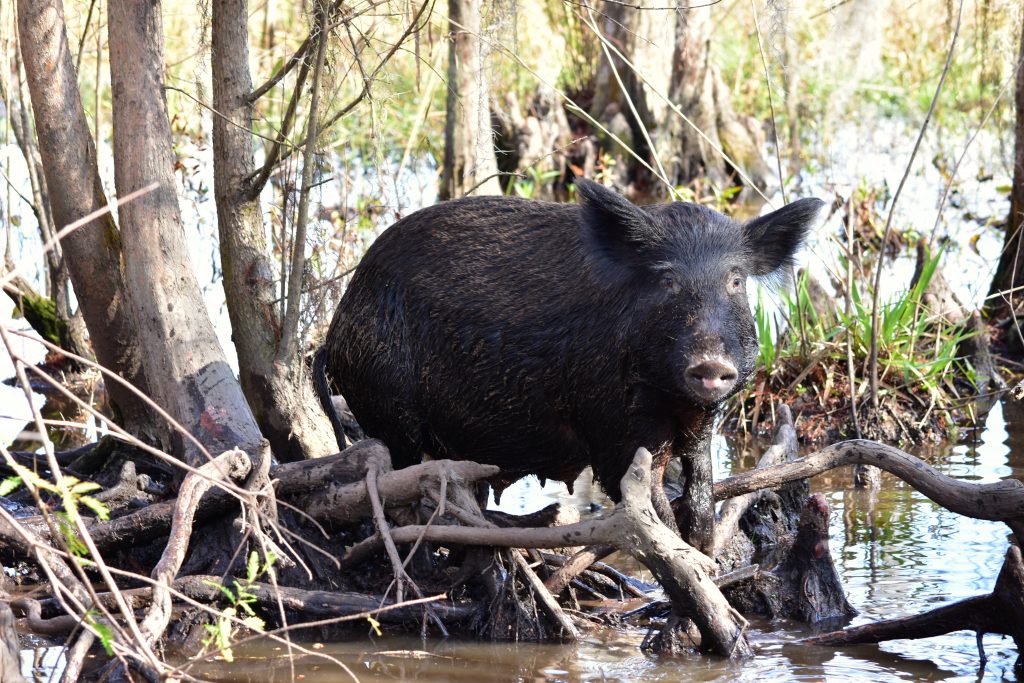
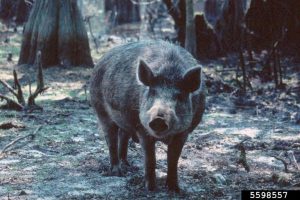
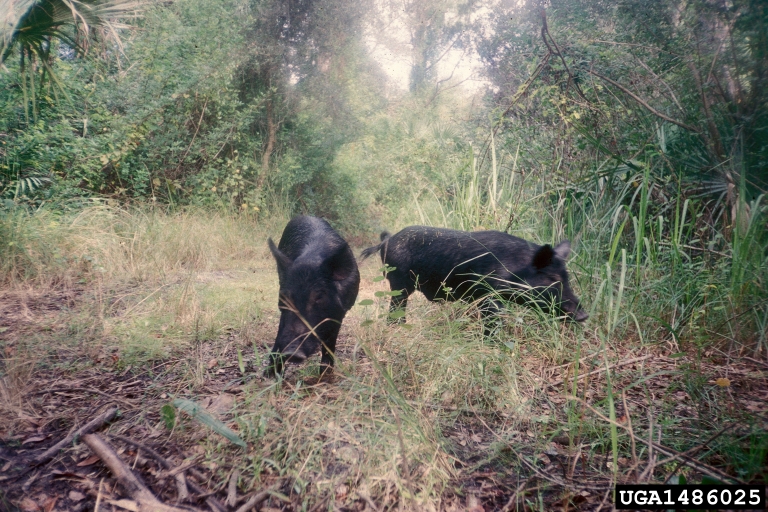
Feral swine, also referred to as wild pigs, wild boar, and feral hogs, can look similar to domestic hogs, but are generally thinner with thicker hides of coarse, bristly hair and have longer tusks.
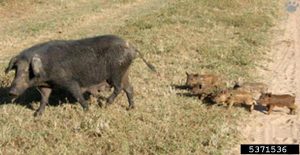
Because they can be descendants of wild boar, domestic pigs, or hybrids of the two, feral swine can vary in color and coat pattern. Piglets are often striped or spotted but lose this coloration as they mature. Adult feral swine weigh between 75 and 250 pounds (35 and 110 kilograms) on average but some can get twice as large and reach 3 feet (91 cm) in height and 5 feet (150 cm) in length.
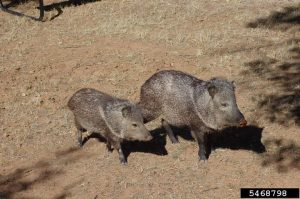
Feral swine can be confused with collared peccary (javelina), a native pig-like mammal of the southwestern United States; however, collared peccary are generally much smaller (15-25 lbs. or 7-11 kg) than feral swine (75-250 lbs. or 35-110 kilograms). The collared peccary is also silver-grey to black, with a distinct lighter-colored collar.
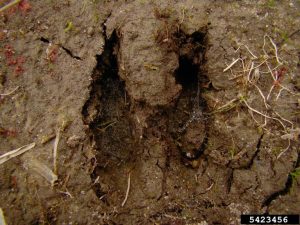
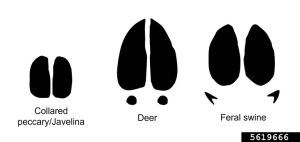
Although feral swine tracks look similar to deer tracks, they have blunter-tipped toes; therefore, they are square rather than the pointed, heart-shaped tracks of deer.
Remember, healthy wild pigs are evasive and will not tolerate being approached by humans. If a pig appears dead, lethargic, approachable, or is otherwise acting abnormally, it may be sick with an infectious disease.
Hoof Print
Scat
Feral Swine
Feral Swine Hoof Track
Different Hoof Prints
Collard Peccary (Javelina)
Feral Swine
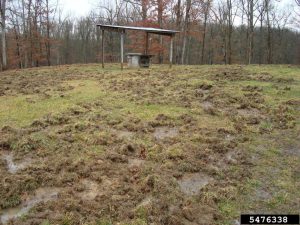
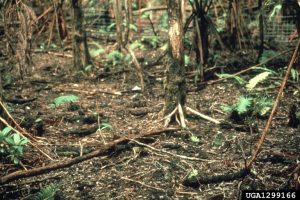
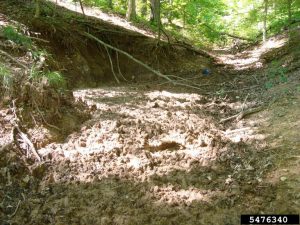
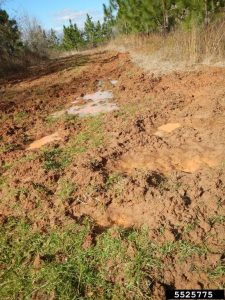
Rooting and Digging Damage
Feral Swine
Feral Swine
SIGNS OF DAMAGE
Dan Clark, USDI National Park Service, Bugwood.org
Feral swine are usually active at night and not often seen during the daylight hours, particularly in hot, humid climates. It may be easier to identify feral swine in your area by looking for signs of damage.
EXTENSIVE ROOTING OR DIGGING
Feral swine use their snouts and hooves to root through the soil in search of food.
MUDDY WALLOWS
Especially in moist areas during warmer months.
RUBBING AND SCRAPING
Trees, posts or other hard structures that have been rubbed or scrapped against heavily nearer to the ground.
Feral swine will rub against hard structures to remove parasites from their skin or scrape their tusks.
TUNNELS OR TRAILS
Distinct pathways through thick areas or vegetation.
HOOF TRACK
These often appear in mud near springs, ponds and streams.
SCAT
May contain partial remnants of acorns, grains and the hair, scales or feathers of animals.